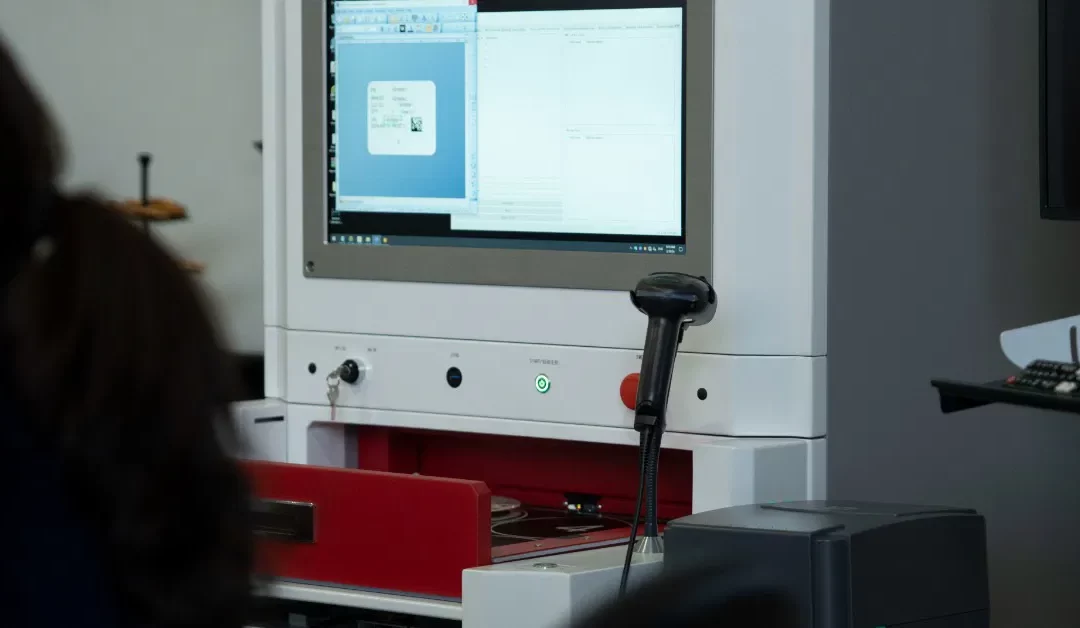
Managing SMD components is a process that usually goes unnoticed—until something goes wrong. However, a single miscalculation of the number of parts on a reel can bring the assembly line to a halt midway through a job, toppling the production schedule like a line of dominoes. In such situations, an experienced warehouse worker knows that counting components is more than just a formality—it’s the foundation that keeps the entire production chain in check. Despite this, many facilities still rely on manual methods or mechanical optical counters that require the tape of components to be unspooled. This process consumes time, and the fatigue of an operator counting their tenth reel in a row increases the risk of error. A mistake of just a few pieces is enough to upset the balance between the warehouse and production—exposing the company to downtime or unnecessary purchases. Is there a solution that allows components to be counted quickly, accurately, and without engaging an army of workers? Fortunately, yes—and it lies in X-ray technology.
Why is component counting still a challenge?
Although the component counting process may seem simple, the true scale of the problem only becomes apparent in large facilities where hundreds or even thousands of SMD reels move daily between the warehouse and the production line. Each of these reels carries a specific number of components—from microscopic resistors and capacitors to integrated circuits—that must be accurately logged before reaching the assembly process. It’s this very moment—ensuring the component count matches the production plan—that determines the flow of manufacturing.
In such conditions, manual counting or using mechanical optical counters that require tape unwinding starts to reveal its limitations. Just imagine a warehouse worker who, after several hours of work, makes a small mistake while counting yet another reel. It might be just a few pieces—but on the scale of production, such an error can mean shortages on the SMT line, delays in order fulfillment, and consequently, additional costs or downtime.
It’s not just a matter of the time required for counting—it’s also about the risks inherent in the process itself. Unspooling the tapes means interfering with protective packaging, which, in the case of moisture-sensitive components, is single-use and must be replaced each time it’s opened. In practice, this leads to the generation of additional packaging waste which—although often negligible for a single reel—adds up to significant volumes in large-scale manufacturing. Every instance of unpacking and re-securing components not only consumes time and operational costs, but also imposes an environmental burden. Automating the counting process, which eliminates the need to open packaging, therefore not only improves logistics but also reduces waste, supporting the sustainable development of the enterprise.
The scale of the issue grows in direct proportion to the size of the facility. In short-run production, where frequent changeovers and rapid job switches are the norm, components rotate rapidly. In such an environment, the lack of counting automation becomes a bottleneck that limits the efficiency of the entire SMT line. With the high pace of work, there’s no room for delays caused by manual counting—warehouse processes must keep up with the speed of production. On the other hand, in high-volume or contract manufacturing, there’s pressure to maintain precise inventory data. Underestimating component quantities can lead to production stoppages, while overestimation results in excessive inventory that ties up capital and storage space. In both cases, inaccurate data negatively affects production planning, increases costs, and limits plant flexibility.
Attempts to solve this issue through cycle counting still rely on manual labor, requiring personnel involvement and often the suspension of some warehouse operations. In practice, this means that counting cannot keep pace with production, and inventory data often does not reflect reality. When implementing Industry 4.0 solutions such as MES or ERP systems, the lack of up-to-date component data turns out to be the weakest link in the digital production chain. In this context, traditional counting methods are no longer sufficient. Maintaining balance between production and the warehouse requires a tool that not only accelerates the process but also ensures precision without compromising component quality—a tool that fits seamlessly into the automated ecosystem of modern manufacturing.
X-ray counters as the answer to SMD component logistics challenges
Such a transformation is brought about by X-ray technology, which has been successfully applied in automating SMD component counting processes for several years now. Unlike traditional methods—which require tape unwinding or opening packaging—this technology allows the contents of reels, trays, or tubes to be scanned without compromising their integrity. As a result, counting can take place quickly, without contact, and while maintaining full protection of the components—something especially crucial for moisture-sensitive parts or particularly delicate devices.
The operating principle behind this technology is simple yet highly effective. An X-ray source emits a beam that passes through the component packaging, while a digital detector captures the image formed by differences in radiation absorption between various materials. The outcome is a clear image of the components inside, which is then analyzed by the device’s software. The system recognizes the number of components based on their X-ray image, without the need to reference tape perforations, allowing for accurate counting without unspooling or moving the items.
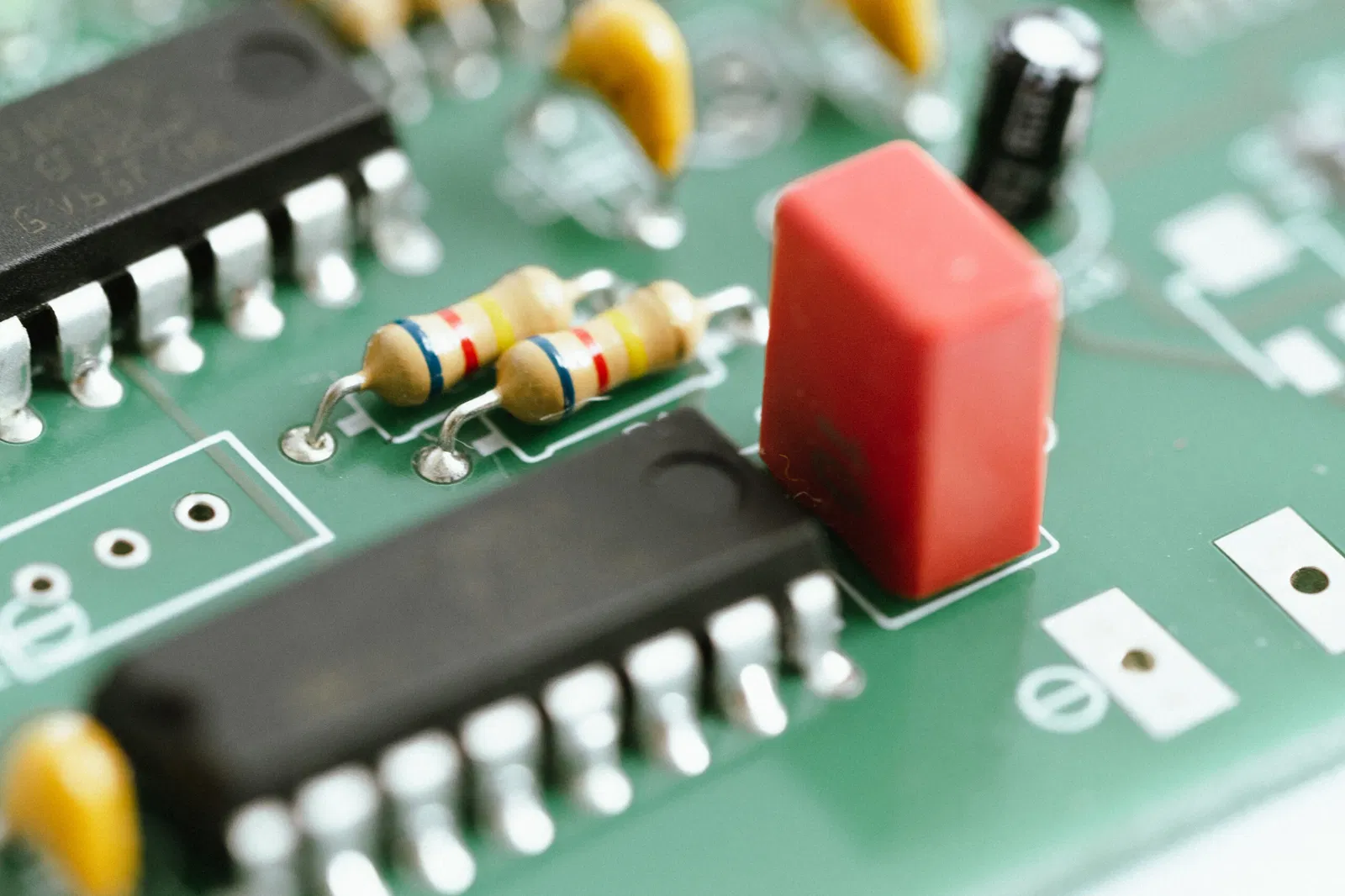
The greatest advantage of this technology over optical counting systems is its versatility. Regardless of the packaging type—be it a reel, tube, or tray—X-rays effectively penetrate the packaging material and deliver an image that can be precisely analyzed. Moreover, thanks to the high resolution of the detector, even the smallest SMD components, such as 01005-size capacitors or resistors, can be counted reliably.
From the user’s perspective, this translates above all into shorter counting times and the elimination of errors caused by manual handling. The lack of need to open packaging reduces the risk of mechanical damage or contamination of components that can occur during tape unwinding. Just as important, the counting process is completely safe—the level of radiation emitted during device operation is minimal and fully compliant with stringent safety standards.
Thanks to X-ray technology, it has become possible to build systems that automate component counting, eliminating the need to engage operators in time-consuming and tedious warehouse tasks. Solutions like the Seamark XC1000 and XC1100 counters offered by the RENEX Group allow entire batches of components to be counted in just a few minutes, maintaining high precision and full integration with production and warehouse management systems.
Seamark XC1000 and XC1100 – precise component counting in practice
X-ray technology for counting SMD components finds its practical application in devices that combine precise imaging, high-speed performance, and integration with production management systems. A prime example of such a solution is the Seamark XC1000 and XC1100 counters, available from the RENEX Group—a long-standing partner providing comprehensive solutions for the electronics industry.
Both Seamark models—XC1000 and XC1100—are based on a micro-focus X-ray source and a digital detector with a resolution of 3072 × 3072 pixels. This configuration enables the capture of clear images even of the smallest components, such as 01005-size elements, regardless of the packaging type.
One of the main advantages of the Seamark counters is their efficiency and time savings. Thanks to a scanning area of 427 × 427 mm, these devices allow for the simultaneous counting of multiple reels or other component carriers, significantly speeding up inventory tasks or component preparation for production. The entire counting process—from closing the chamber to receiving the result—takes only a few seconds. In practice, this means that a task which previously took hours can now be completed in just minutes—with full accuracy and no risk of error.
Importantly, Seamark counters are suitable not only for daily production operations but also for periodic warehouse inventories. For companies that do not require constant access to such equipment, the RENEX Group offers the option to rent a counter for the duration of the inventory. This solution is particularly attractive for smaller enterprises, allowing them to benefit from precise X-ray technology without the need to invest in a purchase—enabling fast and accurate stock verification.
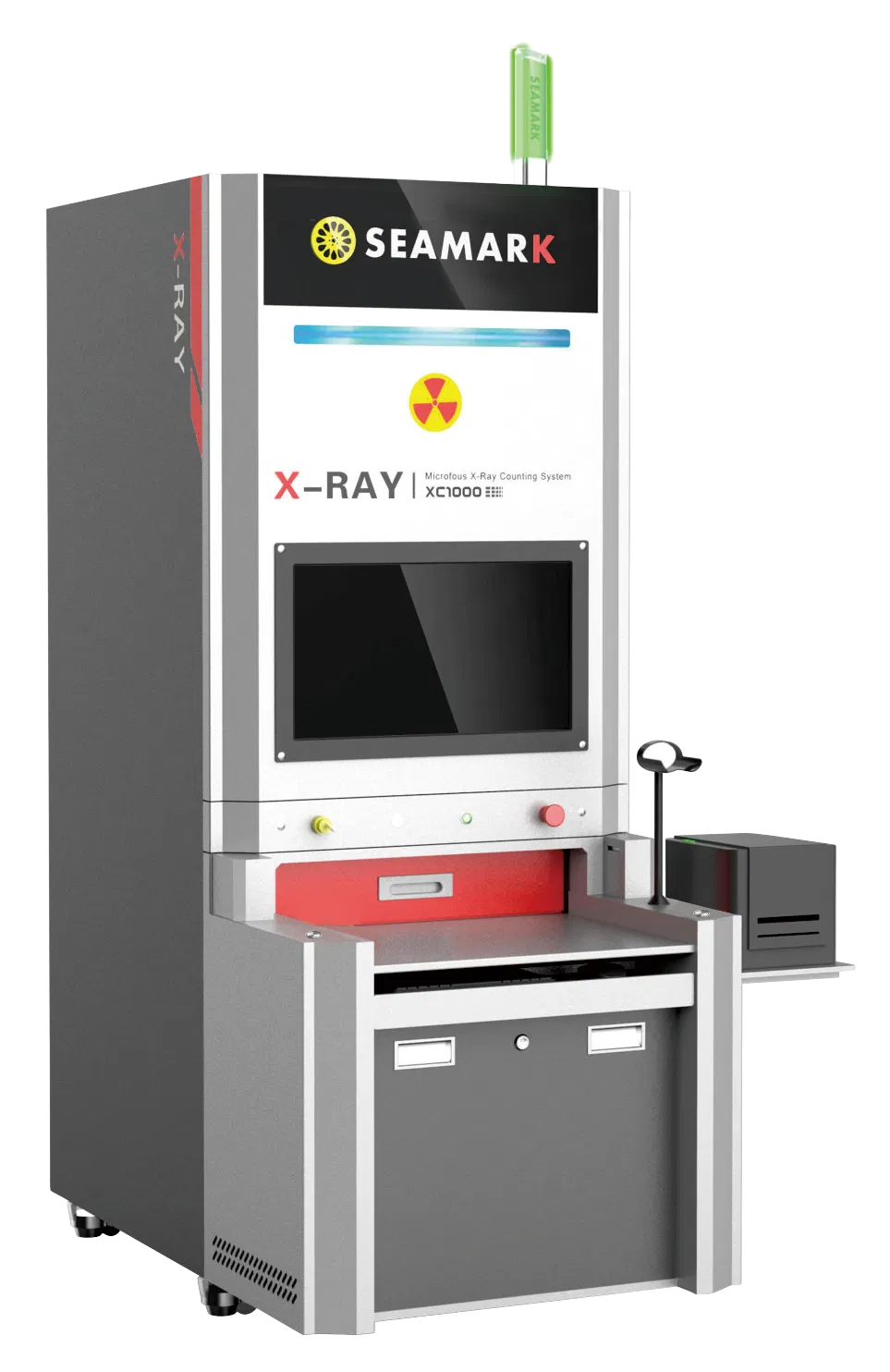
The device’s operation has been designed to be intuitive and fast. The counting process boils down to just a few simple steps: place the component reel on the scanner table, press a button, and wait a few seconds—the result appears almost instantly. The device is always ready to operate, allowing for rapid transitions from one reel to the next without unnecessary pauses or time-consuming setups.
Artificial intelligence algorithms built into the system analyze X-ray images by recognizing only SMD components—their shape, placement, and quantity. This enables the Seamark counters to achieve counting accuracy of 99.99%, regardless of component type or carrier format. The device automatically identifies the layout of the components and adjusts the analysis parameters, eliminating the need for manual settings or calibration, which further simplifies operation.
User safety is also a critical feature. Both the XC1000 and XC1100 models are equipped with a sealed scanning chamber and shielding that limits radiation emission to below 1 µSv/h—in compliance with CE European safety standards. Additionally, door interlock systems prevent the device from operating while the chamber is open, ensuring complete operator protection.

In the context of automation and integration with production systems, Seamark counters offer connectivity with ERP, MES, and WMS platforms. Counting results can be sent directly to production and warehouse management systems, enabling real-time inventory updates. This ensures full control over components—every counted reel, tray, or tube is automatically recorded in the system, eliminating errors and streamlining production planning.
An additional convenience is the ability to automatically generate labels that can be applied to packaging after counting. The label contains information about the component count, the date of counting, and the operator, increasing transparency and traceability in the logistics process.
All these features—from precise imaging, high-speed performance, and ease of use to integration with management systems—make the Seamark XC1000 and XC1100 counters offered by the RENEX Group a comprehensive solution for manufacturing facilities striving to automate SMD component counting processes. Combined with technical consulting, implementation, and training services provided by RENEX, these devices become a practical tool for optimizing logistics and enhancing the overall efficiency of the production process.